MENU
CLOSE

01知るLearn
加賀料理とはAbout Kaga Cuisine
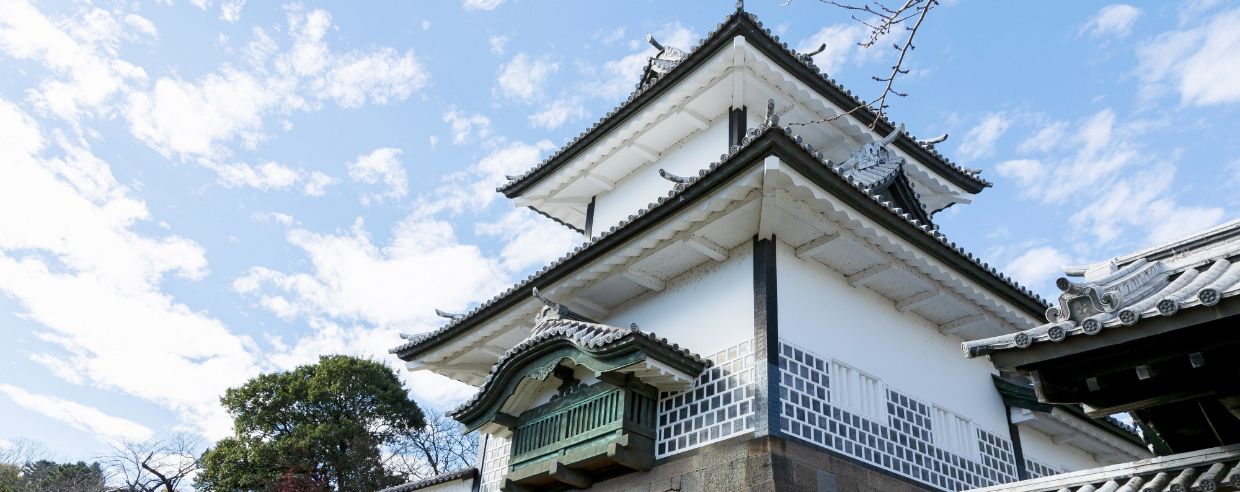
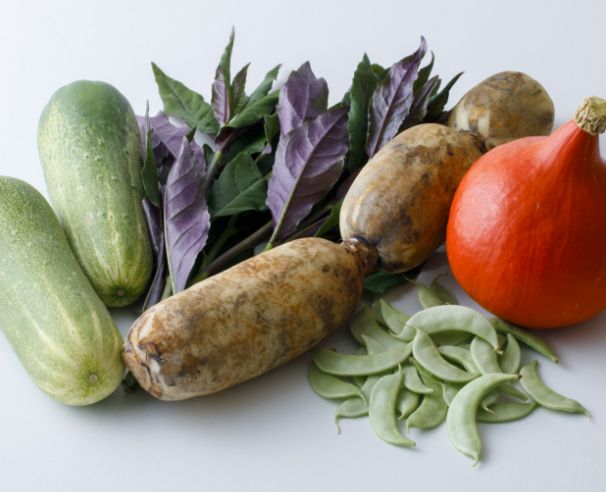
北陸地方、石川県。豊かな自然と伝統が息づいています。江戸時代には加賀藩として、日本最大の石高を誇り、その豊かさは「加賀百万石」と称されました。
この地で生まれた食の総合芸術、それが「加賀料理」です。
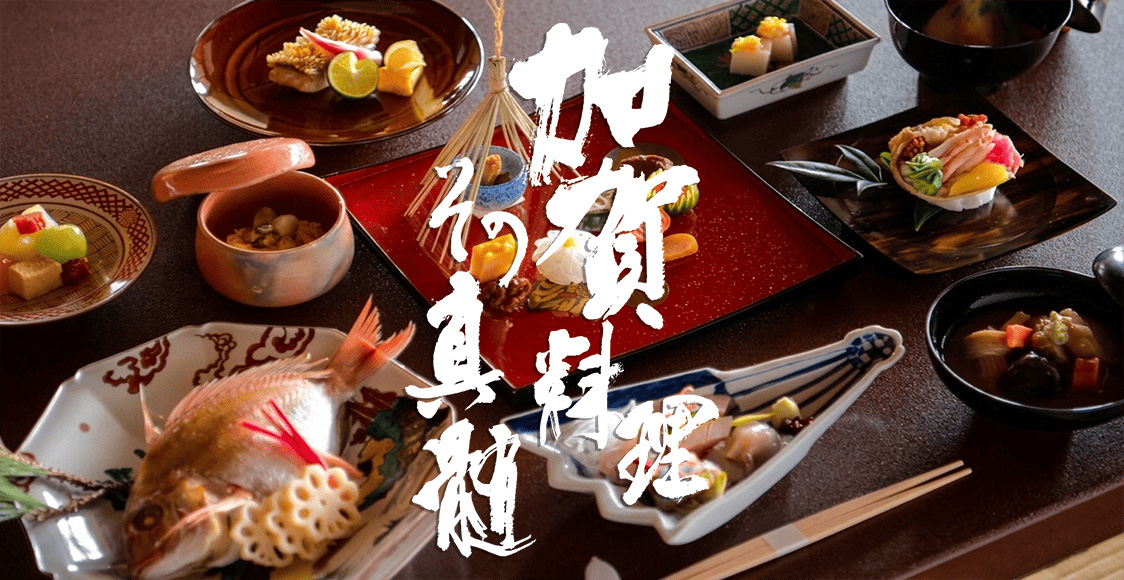
加賀藩と武家に由来する「料理」、それを引き立たせる伝統的工芸品の「器」、掛け軸や花で、節句や慶事、季節を表現した「もてなしの演出」。これらが一体となり、お客様をお迎えします。
地元で採れた季節の食材を活かし、雅な調度品の数々と共にいただく。五感で楽しむ趣深い料理です。
Ishikawa prefecture, in Japan's Hokuriku region, is home to abundant nature and long-lived traditions.During the Edo period, it flourished under the auspices of the Maeda Clan,and boasted the largest rice yield in Japan.This prosperity gave rise to the name “Kaga Hyakumangoku”, (hyakumangoku: value of 1 million koku)
Kaga cuisine is the culmination of the culinary mastery born from this environment.
It welcomes guests through a combination of "cuisine" derived from the Kaga Clan and samurai families, "tableware" of traditional crafts that enhance the food, and "hospitality presentation" that expresses seasonal festivals, auspicious occasions, and the changing seasons through hanging scrolls and flowers.
加賀料理技術保存会 PROMOTION MOVIE
加賀料理の歴史The History of Kaga Cuisine
「加賀料理」という言葉を世に広めたのは、吉田茂元内閣総理大臣の長男、小説家にして食通の吉田健一氏であるとされていますが、石川県ゆかりの文学者である三宅花圃氏の著書によると、大正時代には「加賀料理」という言葉が使われていたそうです。
戦国時代。織田信長・豊臣秀吉による天下統一後も、京都を中心とした仏教文化や公家文化の影響が色濃く残り、その影響を受けた食文化が、加賀の地で形成されました。
その後、藩政の時代には、参勤交代により、江戸の食文化を取り入れます。さらに、前田家は文化振興政策として、美術工芸や、茶の湯を奨励。
こうして、両方の食文化と、工芸が、地元食材と一体となり、「加賀料理」の原型ができたとされています。
The person credited with popularizing the phrase "Kaga cuisine" is the son of former Prime Minister Yoshida Shigeru, essayist and well-known foodie Yoshida Kenichi.
The phrase can be found in the works of authors connected to Ishikawa, such as Miyake Kaho, as early as the Taisho period.
During the Sengoku period, even after the unification of Japan by Oda Nobunaga and Toyotomi Hideyoshi, the influence of Buddhist and court (kuge) culture centered in Kyoto remained strong.
Food culture shaped by these traditions gradually took root in the Kaga region.Later, during the era of domain rule, the system of sankin-kōtai (alternate attendance) brought elements of Edo’s food culture to Kaga. In addition, the Maeda clan promoted arts and culture as part of their cultural policies, encouraging traditional crafts and the tea ceremony.
Through the fusion of these cultural influences with local ingredients and craftsmanship, what is now known as “Kaga cuisine” is believed to have taken its original form.
代表的な料理Typical Dishes
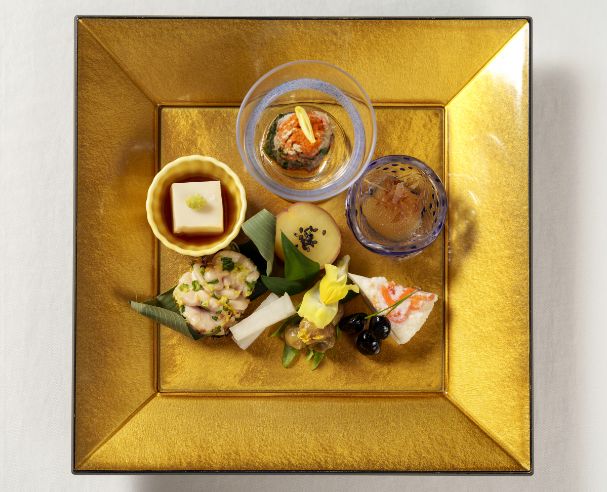
加賀料理の代表的な料理をご紹介します。
We would like to introduce some of the representative dishes of Kaga cuisine.
治部煮“Jibuni”
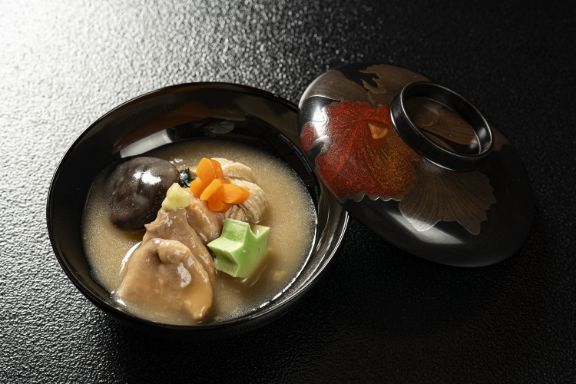
小麦粉を塗したとろみのある鴨肉と、旬の加賀野菜、すだれ麩を甘辛く煮込み、わさびと共に味わう定番料理で、治部椀という専用の器で供されます。
江戸時代、加賀藩の料理人であった船木伝内の料理書「ちから草」には「じぶ」と記されています。
当時の武士の食事の記録によると、鳥類の狩猟と食用は武士の特権でした。加賀藩でも、藩主が鷹狩りで得た鴨を、将軍家に献上した記録が残っています。
大聖寺藩の武士の鍛錬のひとつで、飛び立つ鴨にY字型の網を投げ上げる「坂網猟」は、現在も受け継がれています。
治部煮は、加賀藩と武家に由来する料理なのです。
A classic dish in which duck meat lightly coated with flour is simmered in a sweet and savory broth together with seasonal Kaga vegetables and sudare-fu (bamboo-screen-shaped wheat gluten). It is typically enjoyed with a touch of wasabi and served in a special bowl called a jibu-wan.
In Chikaragusa, a cookbook written by Denai Funaki, a cook of the Kaga domain during the Edo period, the dish is recorded under the name “jibu.”
According to records of samurai meals at the time, hunting and eating birds was a privilege reserved for the warrior class. In the Kaga domain as well, there are records showing that ducks caught during the lord’s falconry hunts were presented to the shogun’s family.
One of the martial training practices of samurai in the Daishōji domain was Sakaami-ryō, a hunting method in which a Y-shaped net was thrown upward to catch ducks as they took flight. This tradition has been passed down to the present day.
Thus, Jibuni is a dish that originates from the culture of the Kaga domain and the samurai class.
鯛の唐蒸し “Tai no Kara-mushi”
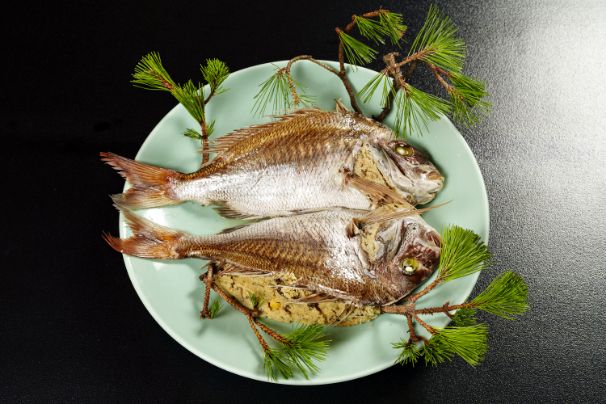
大きな鯛を背開きにし、お腹にニンジンやゴボウなどを加えたおからを詰め、丸ごと蒸した料理です。
婚礼などハレの場で、大皿で振る舞われ、皆で分け合って食べます。切腹を連想させる腹開きではなく、背開きが武士好みで、鯛のお腹に、はち切れんばかりに詰められたおからは、子宝に恵まれることを願っており、縁起の良い料理とされています。
A whole sea bream is butterflied from the back, stuffed with a mixture of okara, carrot, and burdock, then steamed gently.
This dish is presented on large communal platters to be shared amongst the guests,Rather than being split open along the belly—which evokes the image of seppuku (ritual suicide)—the sea bream is opened along the back, a style traditionally preferred by samurai.
The belly of the fish is generously stuffed with okara (soy pulp), symbolizing a wish for many children and prosperity in the family.For this reason, the dish is regarded as an auspicious food.
「器」と「もてなし」“Tableware” and “Hospitality”
加賀料理が供される料亭では、「もてなしの心」を根幹に、細やかな気配りが随所に見てとれます。その一つが、器です。
生前、金沢とも縁のあった芸術家・陶芸家の北大路魯山人氏は、「器は料理のきもの」という言葉を残しています。加賀料理を提供する器には、地元の伝統的工芸品が使われます。
お皿は、美しい色絵を施して作られる九谷焼。お椀は、能登地方の輪島市で生まれた漆器、華やかな蒔絵、沈金が目を引く輪島塗。
職人文化を大切に育ててきた石川だからこそ、料理に上質なきものを着せることができるのです。
加賀料理のもてなし、それは食器だけではありません。格式高い客間や、空間を装飾する雅な調度品の数々。食卓を彩る四季折々の花、手入れが行き届いた庭園。一挙手一投足が美しく、品のある風情の醸成。伝統的な美意識に沿った華やかさでお客様ももてなす、それが加賀料理です。
At the core of traditional Kaga restaurants is hospitality. Careful attention is paid to every detail of the ambiance, beginning with the tableware.
Kitaoji Rosanjin, an artist and ceramicist with ties to Kanazawa left us these words: "tableware is the adornment of food."Traditional local crafts are used for the tableware that serves Kaga cuisine.
The plates are Kutani ware, known for their beautifully painted overglaze designs. The bowls are Wajima lacquerware from Wajima in the Noto region, distinguished by its brilliant makie and chinkin decorations.
Because Ishikawa has long cherished and nurtured a culture of skilled craftsmanship, it is able to “dress” its cuisine in such refined vessels.
The hospitality of Kaga cuisine, however, goes beyond tableware. It is also expressed through the dignified guest rooms, the elegant furnishings that decorate the space, seasonal flowers that grace the dining table, and carefully tended gardens. Every gesture is graceful, creating an atmosphere of refinement and beauty. Welcoming guests with a sense of splendor rooted in traditional aesthetics—this is the spirit of Kaga cuisine.